Whole House Repiping
Replacing old polybutylene, galvanized or failing copper supply lines with PEX or copper.
Typical $6,480 to $15,900If your home was built between the late 1970s and the mid 1990s, there is a real chance some of its water lines are gray polybutylene.
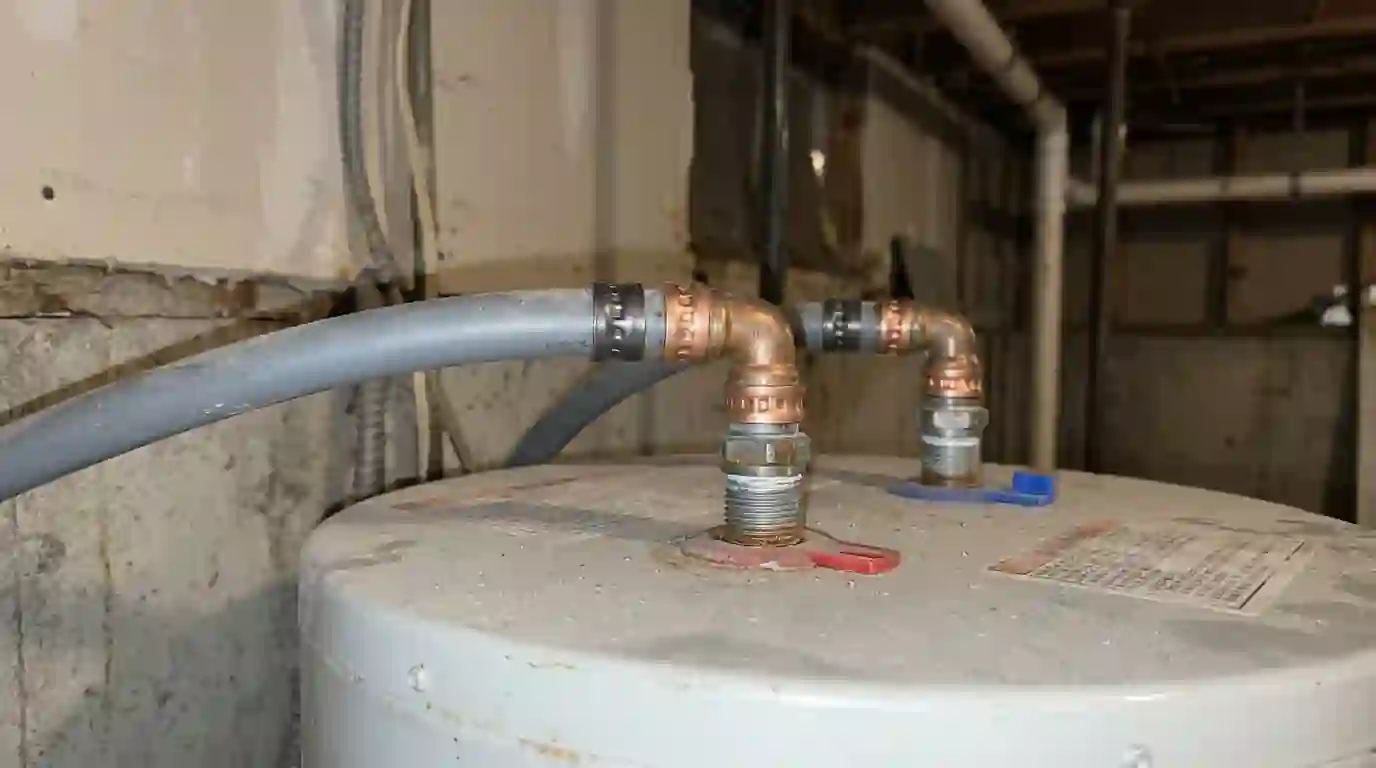
Polybutylene is a gray, sometimes blue or black, plastic supply pipe that was installed in millions of homes from the late 1970s into the mid 1990s. It was cheap and fast to install, and a lot of Hampton Roads subdivisions from that era used it.
Over time the pipe and its fittings can become brittle and fail without much warning. That is why many insurers ask about it, and some will not write a policy on a home that still has it.
Short gray pieces right at a valve are sometimes just the stub, while the rest of the house is copper. The only way to be sure is to follow the pipe.
In Virginia Beach we find polybutylene most often in Green Run, Kempsville Lakes, Indian Lakes, Salem, Red Mill and Glenwood. In Chesapeake, Great Bridge and Greenbrier homes from the 1980s commonly have it. It is less common in older Norfolk neighborhoods, which tend to have galvanized or copper.
Some homes have had partial replacements over the years, so you might find copper in the kitchen and polybutylene everywhere else.
A whole house repipe runs new PEX or copper from the main to every fixture. In crawlspace homes, most of the work happens under the house and in the attic, with small openings in walls. Slab homes need more wall and ceiling access because there is no space below.
Most homes are done in two to five days, and on most jobs we restore water each evening. The city inspects the new lines before walls are closed.
Some 1980s homes also have a polybutylene main from the meter to the house, often blue or gray. Replacing it at the same time as the repipe avoids a second job later and gets rid of the last of the old pipe.
Not always. It can hide in crawlspaces and walls. A plumber following the lines from the water heater and main gives a clearer answer.
Replacing old polybutylene, galvanized or failing copper supply lines with PEX or copper.
Typical $6,480 to $15,900New main water service lines from the meter to the house, trenched or pulled through.
Typical $2,190 to $5,640Whole home plumbing and gas checks for buyers, sellers, landlords and insurers.
Typical $249 to $569A person answers (757) 505-1910 around the clock, and our own crews cover Virginia Beach and the rest of Hampton Roads.